
French Drains & Yard Drainage
Part of your yard stays wet? We will come look for free.
Coos County averages around 64 inches of rain a year, most of it between October and April. Water that sits against a foundation, ponds in a yard, or runs down a slope with nowhere to go does real damage, and it does it slowly enough that people live with it for years before calling anyone. Drainage is unglamorous work. It is also the cheapest problem you will ever fix on a property.
French drains
A trench, drain rock, perforated pipe wrapped in filter fabric, sloped to a real outlet. Two parts get skipped and both of them matter. The fabric: without it, fines wash into the rock, the voids silt up, and the drain quits working in a handful of years. And the outlet: a drain that runs to nowhere just relocates the puddle. We daylight the discharge where grade allows and run it to a drywell or a storm connection where it does not.
Foundation and footing drains
Water standing against a foundation wall finds its way in - through the slab, through the cold joint, up into the crawlspace. A perimeter drain at the footing takes hydrostatic pressure off the wall and gives the water somewhere to go before it gets that far. This is the single most common call we get on older homes around Coos Bay and North Bend.
Yard drainage and downspouts
Catch basins where water collects, solid line to carry it away, and downspouts tied in so roof water is not being dumped six inches from the foundation. On a lot of properties, regrading the yard so the surface actually sheds is half the fix on its own, before a single foot of pipe goes in the ground.
Slope and hillside runoff
On a slope, drainage and stabilization are the same job. Interceptor drains above a wall to catch water before it ever reaches it, drain rock and pipe behind the wall, and a discharge point that will not undercut anything downhill. A retaining wall without drainage is a wall with a deadline.
Common Questions
- How much does a french drain cost?
- It comes down to length, depth, what the trench has to run through - rock is much slower than dirt - and where the water goes at the end. We price it after walking the property, because guessing at it over the phone helps nobody.
- Do french drains stop working?
- The ones built without filter fabric do. Fines wash into the rock, the pipe plugs, and it quits draining within a few years. Fabric-wrapped rock and a proper outlet is the difference between a drain and a trench full of gravel.
- There is water in my crawlspace. Is that a drainage problem?
- Almost always. It is usually surface and roof water being dumped next to the foundation, groundwater with no perimeter drain to intercept it, or both. Worth looking at before spending money on a sump that treats the symptom.
- Can you do drainage work in the winter?
- Yes, and winter is when you can actually see where the water goes, which helps us solve it. Wet ground makes the work slower and messier, so if it can wait for a dry stretch it will usually cost less.
- Where does the water actually end up?
- Daylighted downhill where the grade allows, into a drywell where it does not, or tied into a storm system where one is available and the connection is permitted.
Drainage We Have Built
Real jobs, real photos. Every one of these is a page you can look through.
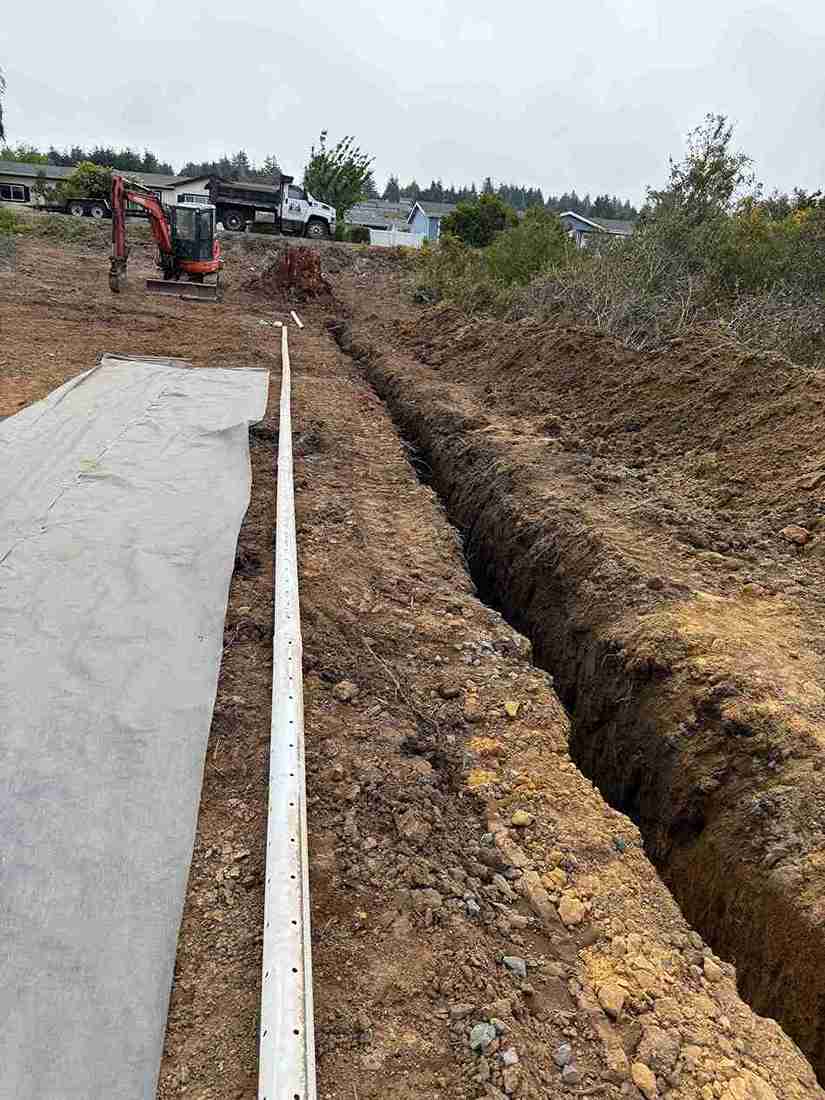
Coos Bay Home, Garage & ADU Build Pads
Woods cleared, cut to grade, compacted pads for a house, garage and ADU, and 400 ft of french drain
View Project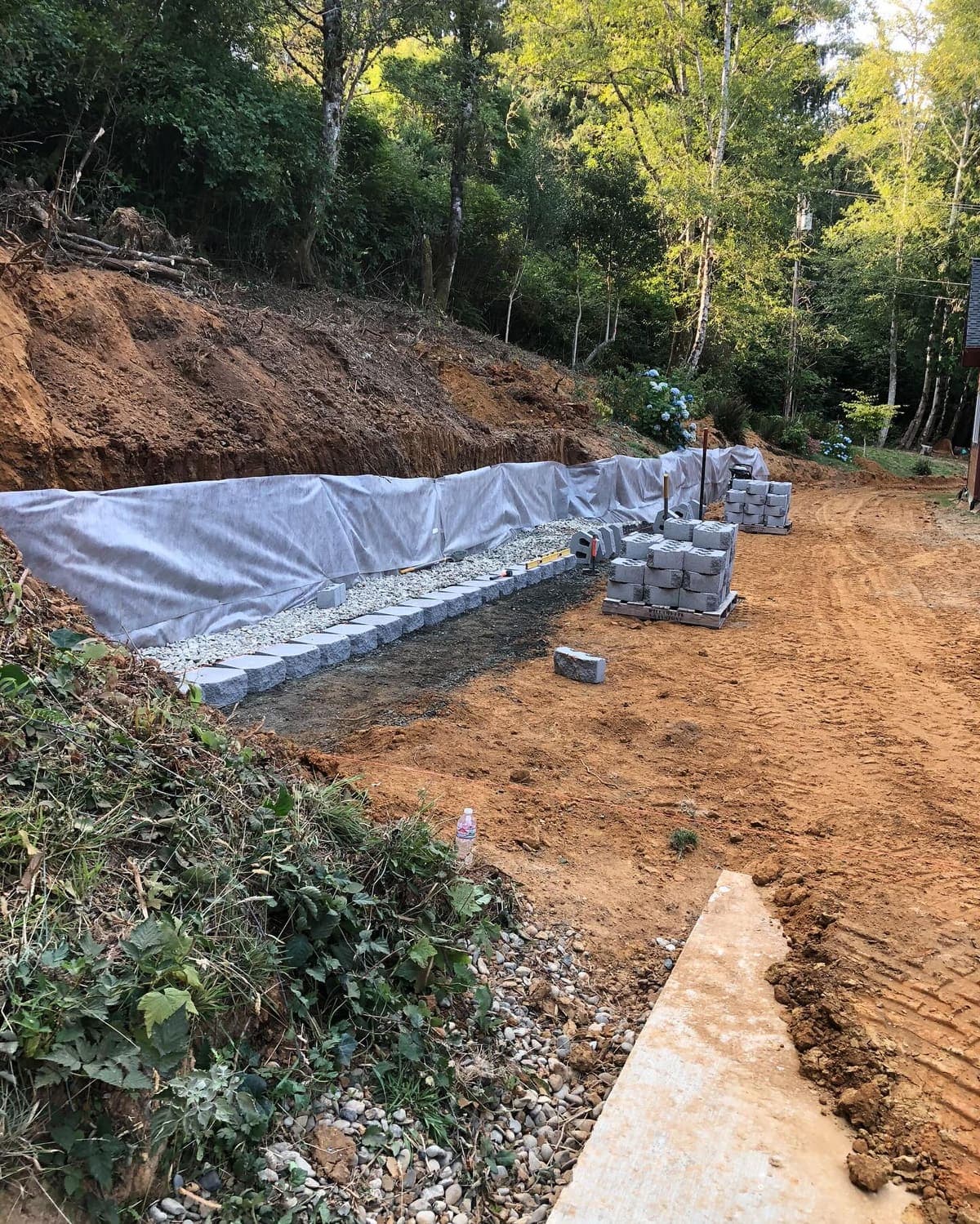
Residential Foundation Protection & Retaining Wall
Retaining wall with integrated French drain system
View Project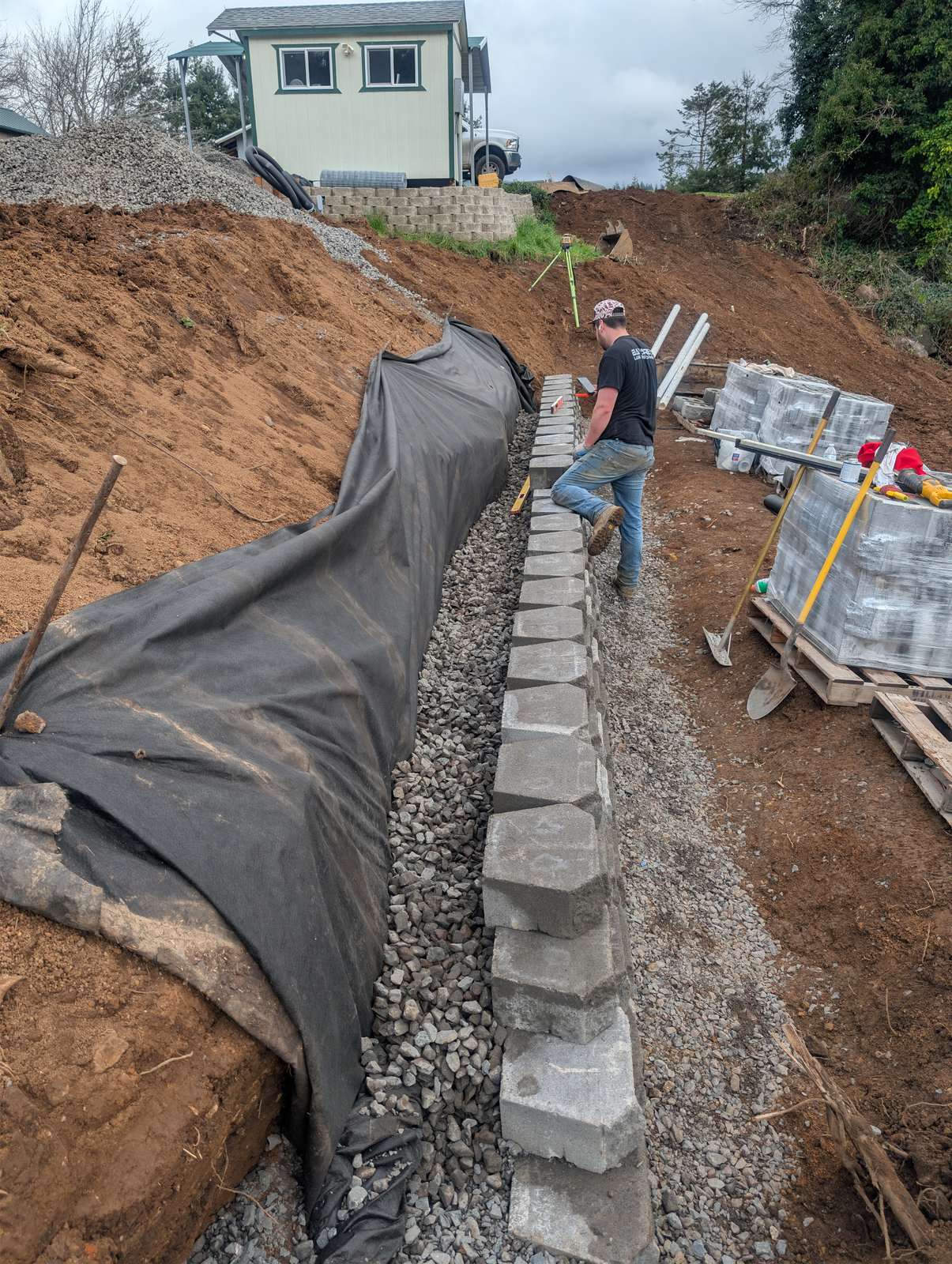
Curved Block Retaining Wall & Drainage
Retaining wall with a drain built in to carry groundwater away
View Project